Roguelike Everywhere – Why Procedural Isn’t a Genre, It’s a Mindset
From deckbuilders to cozy sims, roguelike elements are everywhere. But the real takeaway isn’t permadeath or random levels—it’s procedural thinking.
Core Roguelike Thinking
Replayability by Systems, Not Content: Build depth by interaction, not volume.
High-Value Failure: Each loss teaches something tangible.
Tight Session Design: 10–30 minute loops that feel satisfying on their own.
Popular Mashups
Balatro, Slay the Spire – Roguelike deckbuilders
Into the Breach – Roguelike tactics
Backpack Hero, Peglin – Roguelike cozies
Dead Cells, Hades – Roguelite action RPGs
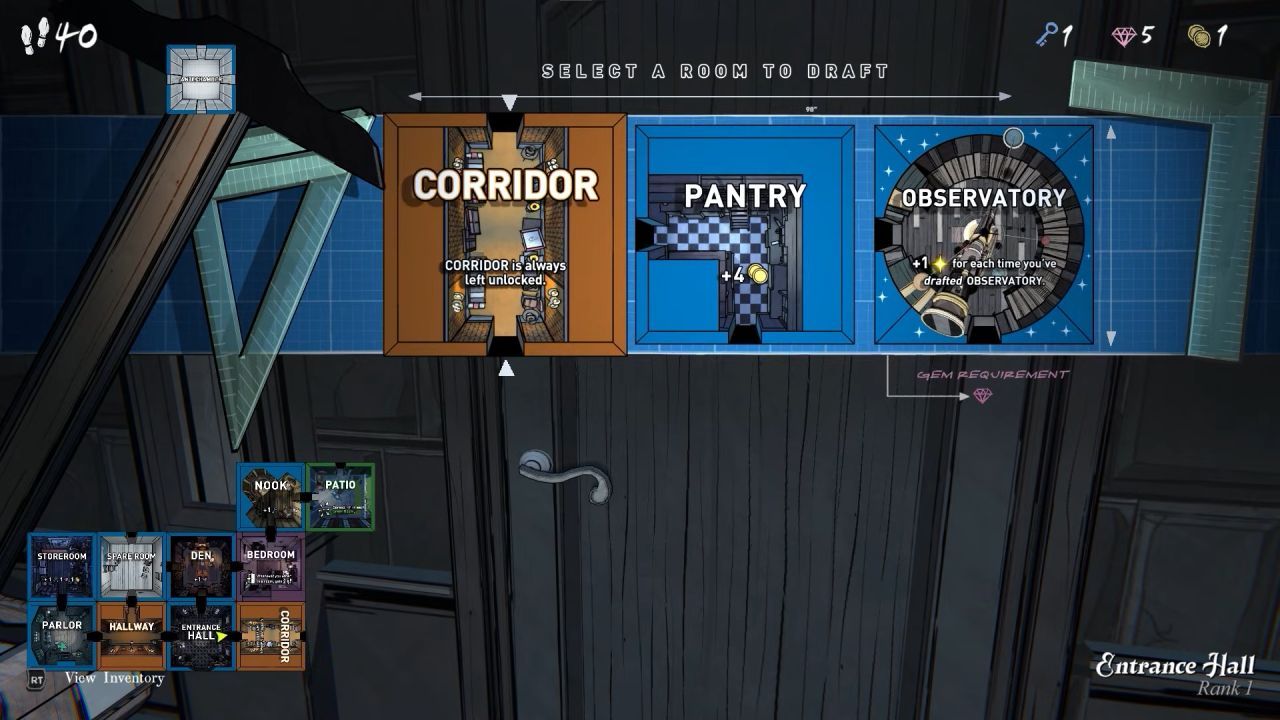
Blue Prince - Roguelike Room Drafter
Design Takeaways
Progression Can Be Psychological: Unlocks aren’t always material—they can be knowledge.
Mix & Match: Adding a roguelike loop to non-traditional genres creates fresh engagement.
Economy of Development: Procedural systems often create more game from fewer assets.
Conclusion
Thinking like a roguelike designer means asking: “How can this system create more than it contains?” It’s about building infinite possibility with elegant constraints.
"Roguelike isn’t about dying. It’s about trying—again, and again, and again."